
AI Opportunities in AEC
“Executives in AEC companies often find themselves grappling with the temptation of solving broad industry problems using AI. However, the real value lies in addressing challenges and opportunities unique to their business.”
In the rapidly evolving Architecture, Engineering, and Construction (AEC) industry, Artificial Intelligence (AI) holds the potential to revolutionize processes and deliver significant competitive advantages. However, one common mistake that executives in AEC companies make when developing their AI strategy is focusing on solving generic industry problems rather than addressing the specific challenges or opportunities unique to their business. This approach, while well-intentioned, can lead to inefficient use of resources and redundant efforts.
Avoiding the Common Pitfall: Focusing on Generic Industry Problems
It’s easy to see why many executives gravitate toward solving common industry problems. Issues related to accounting and finance, hiring and recruiting, and proposal writing are pervasive across the AEC sector. AI-powered tools that address these challenges offer widespread appeal, promising improvements in efficiency, accuracy, and profitability. However, the pursuit of these broad solutions can be a strategic misstep for AEC companies.
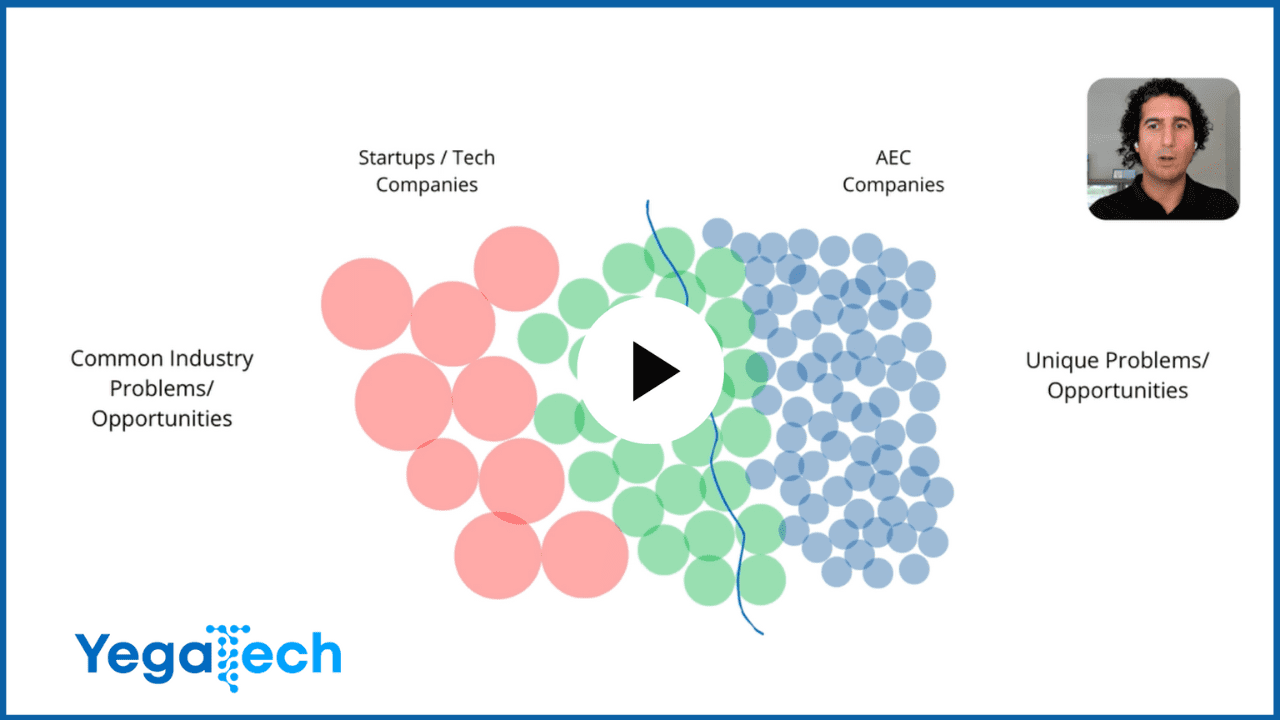
The primary reason is that technology companies and startups are already aggressively developing AI solutions for these widespread issues. With their focused expertise and substantial resources, they are well-positioned to create scalable tools that will eventually become industry standards. For an AEC company, investing heavily in solving these common problems is not only redundant but also diverts valuable time and money from more impactful initiatives.
The Strategic Advantage: Addressing Unique Business Challenges
Instead of pouring resources into generic industry problems, AEC executives should shift their focus to challenges and opportunities unique to their business. These could be related to proprietary processes, specialized service offerings, or niche market needs. By focusing on these specific areas, companies can leverage AI to gain a competitive edge that is difficult for others to replicate.
For example, AEC firms that have developed specialized datasets over the years for project cost estimation can leverage AI solutions to gain a competitive advantage in the market. Another company might have developed a proprietary risk assessment solution that could benefit from AI-driven predictive analytics, enhancing its ability to meet tight deadlines and reduce project risks
Conclusion: The Path Forward for AEC Executives
As the AEC industry continues to evolve, the role of AI will only become more critical. However, the key to successful AI implementation lies not in chasing broad industry trends but in addressing the specific challenges and opportunities unique to each business. AEC executives can develop AI strategies that drive innovation, efficiency, and long-term success by focusing on what sets their company apart.
In doing so, they can avoid the pitfalls of redundancy and inefficiency, ensuring that their AI investments are not just another expense but a true strategic advantage.
So, what AI opportunities are unique to your business? Now is the time to identify and leverage them for a competitive edge only your company can offer.
Contact us today for tailored insights and support in developing a strategic AI approach. Additionally, explore our blog page with our latest article on AI-driven success.
